Advertisement
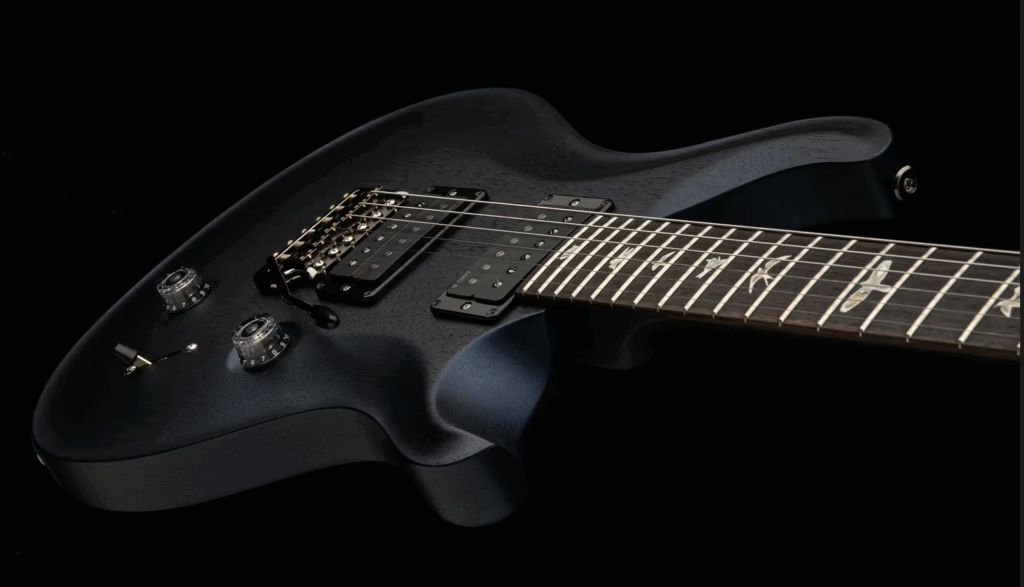
Photo provided by Rivolta Guitars

__________________________________________________________________________________
Few automobiles embody the swagger and stylistic bravado of 1950s American car culture quite like the 1957 Chevrolet. Its modest yet pointed rear fins, expressive chrome trim, and sleek shoulder lines have become symbols of an era when automotive design was as much about attitude as it was about function. Although subtle compared with the dramatic “shark-fin” fins of later models like the 1959 Chevrolet, those tailfin cues from ’57 still captured a spirit of motion and innovation that resonates decades later — not just on the road, but in the world of musical instrument design as well.
The ’57 Chevy Look: Subtle Fins, Bold Expression
The 1957 Chevy’s design wasn’t about overt exaggeration — it was refined, stylish, and forward-thinking. Its rear fenders carry elegant, pointed extensions that hint at speed and aerodynamic grace without overwhelming the viewer. While later Chevrolets (like the ’59) exaggerated this into full shark-fin expression, the ’57 struck a balance between classic lines and futuristic intent. This balance made it a favorite not just among car collectors, but also among designers seeking inspiration in another creative medium.
RELATED ARTICLE: FEAR AND FOLKLORE OF BOUTIQUE GUITAR BRANDS
Automotive Influence on Guitar Aesthetics
It may seem unusual to connect a classic car with an electric guitar, but the two have a long-shared history in American culture. Celebrated electric guitar makers and custom shops have, over the years, drawn on automotive design — from metallic finishes that echo car paint jobs to shapes and contours that suggest motion and personality. In some custom-built guitars, designers have explicitly referenced classic car motifs, including body finishes, inlays, and bespoke structural touches inspired by tailfins and chrome trim.
This interplay is rooted in more than nostalgia: both classic cars and electric guitars became icons of mid-century lifestyle and youth culture. The visual punch of a chrome-trimmed car or a striking guitar silhouette carries emotional weight that transcends pure function — these are objects that speak to their era.
Modern Guitars with Classic Attitude (Featuring Rivolta)
One modern instrument that embodies a blend of vintage inspiration and contemporary artistry is the Rivolta Mondata Classico Electric Guitar. Designed by Dennis Fano and built under the Rivolta banner, this guitar doesn’t literally copy automotive fins — but its visual language shares the same spirit of clean, flowing form and purposeful curves reminiscent of classic car design.
The Mondata’s offset body lines, tasteful German carve contouring, and balanced silhouette convey a sense of motion even at rest — much as a ’57 Chevy’s sleek profile suggested forward momentum even parked. Its raised center block, elegant binding, and metallic finishes evoke an aesthetic sensibility akin to chrome accents and road-ready shine, and its overall look feels like an instrument informed by an appreciation for the analog elegance of mid-century design rather than merely practicality.
Other modern guitars that nod to automotive elegance — whether through paint, contouring, or bespoke custom touches — include limited custom guitars that take inspiration from classic cars’ body lines, finishes, or even legendary engine names. While these references vary in intensity, they highlight how automotive design has influenced guitar culture over decades.
Why the Connection Matters
At first glance, cars and guitars seem like very different machines — one built for motion, the other for sound. But both are crafted objects, celebrated for their ability to evoke emotion, identity, and style. The ’57 Chevy with its iconic yet refined fins is an early example of design that marries form and flair. Modern guitar makers like Rivolta draw from that same design ethos, translating ideas about line, contour, and attitude into instruments that feel iconic and expressive.
Whether you’re a gear geek, a guitar player, or a design lover, it’s fascinating to see how visual cues from one era of craftsmanship continue to influence another — proving that great design, like great music, stands the test of time.
A World inspired by design and performance
Before diving into specs, tone, and feel, it’s worth appreciating how the Rivolta Mondata Classico fits into a broader design tradition. Much like the 1957 Chevy, whose subtle fin lines suggested motion and confidence without excess, the Mondata Classico balances style and purpose with remarkable restraint. Its flowing contours and offset stance feel intentional rather than flashy—an instrument shaped by the same mid-century mindset that valued elegance, speed, and personality in equal measure. That visual promise sets the expectation: this is a guitar designed not just to look iconic, but to perform with the same sense of momentum and attitude that made the ’57 Chevy unforgettable.
In hand, the Rivolta Mondata Classico immediately delivers on that promise. The body feels balanced and deliberate, with a weight that sits comfortably whether standing or seated, and an offset shape that naturally guides the guitar into playing position. The neck has a familiar, broken-in feel right out of the case—substantial enough to inspire confidence without feeling bulky—making long sessions effortless. From the first chord, the Mondata Classico reveals a voice that’s articulate and responsive, blending clarity with warmth in a way that suits everything from clean, chiming passages to driven, dynamic playing. It’s the kind of guitar that feels intuitive rather than demanding, inviting you to play longer and push further.y use comfortable, while up to 20 hours of playtime impressively powers the tube circuitry. You may experience light clamping force on larger heads, but that can be adjusted with aftermarket pads.
That versatility is reinforced by the Mondata Classico’s thoughtfully chosen pickup configuration and straightforward electronics. The pickups deliver a clear, focused response with enough output to push an amp while retaining note definition, even under gain. Clean tones are open and chimey, with a tight low end and a slightly scooped midrange that keeps complex chords articulate. Roll into overdrive and the guitar responds with a muscular growl that never gets muddy, making it equally comfortable handling classic rock rhythms or more modern, textured lead work. The controls are intuitive and responsive, encouraging subtle adjustments on the fly rather than drastic changes—another nod to the guitar’s refined, purpose-driven design.
Much like the 1957 Chevy itself, the Mondata Classico succeeds because it understands restraint as a form of confidence. The Chevy’s fins didn’t shout—they hinted, suggesting speed, optimism, and forward motion through clean lines and thoughtful proportions. The Mondata Classico operates the same way. Rather than chasing trends or excess, it leans into timeless design, pairing visual character with real-world performance. It’s a guitar that looks like it belongs to a specific lineage yet feels completely at home in modern playing environments. In the end, the Mondata Classico isn’t just inspired by mid-century aesthetics—it embodies the philosophy behind them. It rewards players who appreciate detail, balance, and feel, offering an experience that’s both expressive and dependable. Like the ’57 Chevy cruising effortlessly down the road, this guitar invites you to enjoy the journey as much as the destination—proof that when great design principles are respected, they never go out of style.
Pros
Cons
Supplemental
While the Mondata Classico’s stock tuners get the job done, holding pitch reliably and complementing the guitar’s clean lines, there’s room for refinement. Players chasing ultimate precision and silky-smooth tuning action might appreciate an upgrade to high-end options like Ratio tuners. Such an addition wouldn’t just improve stability—it would make string changes faster and more intuitive, giving buyers a way to tailor the guitar’s performance without compromising its iconic design.
Conclusion
The Rivolta Mondata Classico demonstrates that great design transcends medium. From the subtle, confident fins of the 1957 Chevy to the guitar’s flowing body lines, curves, and tonal responsiveness, the Mondata Classico proves that aesthetics and function can coexist seamlessly. It’s more than a nod to automotive nostalgia—it’s a modern instrument that carries the same spirit of motion, elegance, and personality that made classic American design iconic. For players who value both visual flair and expressive playability, the Mondata Classico delivers an experience as memorable as the roadster that inspired it.
In our next article about the Rivolta Mondata Classico, we will focus on the components and what makes it unique to other guitar brands.
A RECAP OF WHAT YOU MIGHT HAVE MISSED