Advertisement
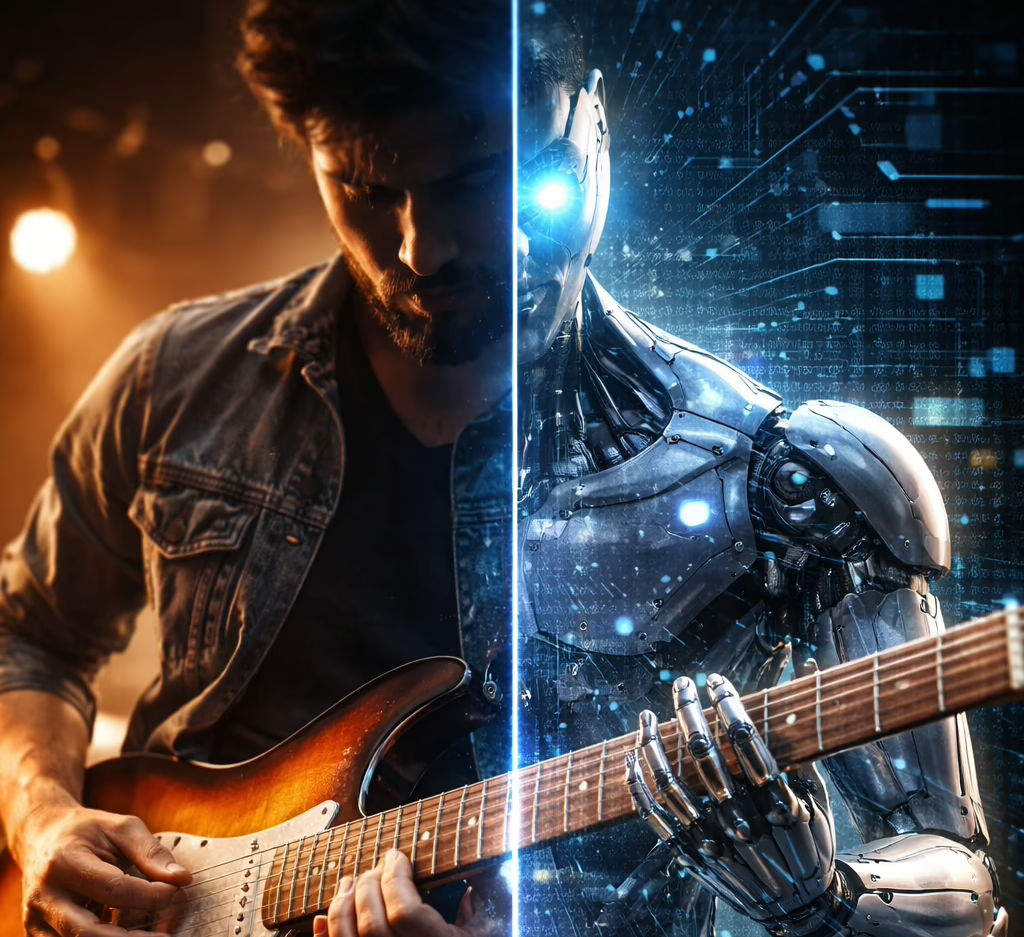
Photo provided by: Guitar Thrills Magazine

__________________________________________________________________________________
For every technological revolution, there is a moment when progress stops feeling abstract and starts feeling personal. For artists and musicians, that moment often comes when a tool replaces not just instruments or workflows, but the very craft they have spent years mastering.
This is the elephant in the room of AI in music: job displacement and creative dilution are not side effects—they are central outcomes if left unmanaged.
Fading Technologies vs. Turning Technologies
History teaches us that not all technologies provoke resistance. Some fade naturally. CDs replaced cassette tapes without protest. Recording software replaced analog mixers quietly. Musicians adapted because these tools augmented creativity without threatening livelihoods directly.
AI is different.
Unlike past recording tools or production software, AI can generate compositions, write lyrics, and mimic performance styles. When a technology begins to replace human artistry rather than enhance it, society reacts—and the reaction can be sharp.
Why AI Is Volatile in Music
AI becomes socially volatile for artists when three conditions align:
This volatility is driven not by fear of machines, but by economic insecurity, loss of creative agency, and the erosion of artistic trust.
Data, Copyright, and Creative Trust
No AI system is perfectly ethical or accountable. Training data often includes copyrighted works, sometimes without proper attribution or compensation. Centralized AI platforms increase efficiency, but they also increase creative risk.
Artists cannot inspect, correct, or meaningfully challenge AI outputs that borrow from their work. Trust must be earned through transparency, licensing, and fair revenue-sharing models.
Resistance Through Structure, Not Revolt
History shows that revolts against technology rarely succeed. For artists, the most effective resistance is structured:
Technologies slow down when responsible deployment is costly and accountability is enforced.
"AI can mimic riffs and rhythms, but it can’t feel the soul behind them. Musicians must demand transparency and protect their craft before creativity becomes just code." – Guitar Thrills Magazine
A Practical Path Forward for Musicians
If artists intend to protect their craft and livelihoods, several steps are critical:
1. Center Creative Labor
Focus on tangible impacts:
2. Demand Transparency from AI Platforms and Streaming Services
Musicians should insist on:
Revenue-sharing models that reflect AI usage
Clear disclosure of AI training datasets
Attribution and credit for human-generated content
Audits for copyright compliance
3. Attach Liability to Harm
Platforms that profit from AI-generated music should be accountable for infringement, economic displacement, and misattribution.
4. Build Friction Intentionally
Licensing standards, certification programs, and professional ethics for AI in music create necessary friction, preventing reckless deployment.
5. Preserve Human-Centered Music Spaces
Concerts, live performances, and human-curated works should be recognized and supported. Certification or labeling of “human-authored” music can help maintain choice and market value.
6. Engage Fans and Communities
Public awareness is a powerful lever. Educating listeners about the difference between human-crafted and AI-generated music can influence market demand and support ethical practices.
The Real Risk of Ignoring the Elephant
If AI adoption continues without addressing creative labor, transparency, and accountability, backlash will be cumulative:
Early, structured action is far more effective than reactive disruption
Conclusion: A Turning Point for Music
AI does not have to destroy artistry. But neither will it fade quietly like obsolete hardware.The music industry is at a turning point where decisions—legal, economic, and ethical—will determine whether AI becomes a tool for empowerment or a source of creative instability.
The elephant in the room is not AI itself. It is whether the industry is willing to confront who benefits, who bears the cost, and who is held accountable. Ignoring that question risks a reaction that could undermine creativity and livelihoods. Addressing it offers a future where artistry, innovation, and human agency coexist, preserving the soul of music while responsibly integrating new technologies.
"AI isn’t just a tool for music—it’s a test of our industry. It can enhance creativity, but without transparency and accountability, it risks replacing artistry with algorithms. The future of music depends on protecting human creativity while responsibly integrating technology." – Guitar Thrills Magazine